
Different types of orthodontic appliances
What's the right option for you?
Orthodontic treatment relies on appliances that apply force to the teeth and move them in the desired direction. It’s important to remember that a tooth itself doesn’t “know” which way it’s being moved—it simply reacts to the force applied to it. That’s why teeth can often be straightened just as effectively with traditional fixed appliances (such as braces) as with modern aligners.
So which appliance is the best option? It always depends on the individual situation. Each method has its own strengths and limitations, and it is the orthodontist's job to plan the treatment in such a way as to achieve the best possible result. For example, aligners are not suitable for all cases, even though they are a popular and preferred option for many.


Lingual orthodontics – a discreet and flexible option

Treatment begins with a virtual plan, which is used to produce a set of aligners. Each aligner gradually moves the teeth in the desired direction, and they are typically replaced every week. The aligners must be worn for at least 22 hours a day to ensure that the teeth move as planned.
Advantages of orthodontic treatment with aligners
- A discreet and aesthetic option
- The removable design makes it easier to clean your teeth
- In mild and moderate cases, treatment may be faster
- The interval between check-ups may be longer
- Extra appointments are needed less frequently
Challenges of membrane orthodontics
- It is important to use the aligners sufficiently to ensure that the treatment proceeds as planned
- Not all tooth movements are as easy to achieve with fixed appliances
- In complex cases, treatment may take longer
- There is less high-quality scientific research data available (because the treatment method is newer)
It is important to understand that Invisalign treatment, for example, is not the same when performed by different dentists. The success of the treatment depends on how well and carefully the treatment plan has been prepared. The 3D plan provided by the dental technician is never completely ready, but often requires careful modification by a specialist to ensure that the treatment is as predictable as possible and the result is permanent. The dentist responsible for orthodontics must have both theoretical knowledge (biomechanics, anatomy, physiology) and practical experience of different treatment needs.
Fixed devices – a traditional and reliable method

Fixed appliances, most commonly braces, are a long-established and extensively studied method of orthodontic treatment. They consist of brackets attached to the teeth and an archwire that guides the teeth into the desired position.
Braces can be traditional metal or more discreet, light-colored ceramic ones. Visible metal braces have come back into fashion, especially among young people. The choice is largely aesthetic, as there is no functional difference between them – teeth move according to the same principle with both options.
In addition to braces, other fixed appliances include QuadHelix (QH) and Rapid Maxillatory Expansion (RME) appliances, which are used to expand the upper dental arch in orthodontic treatment for growing children.
Advantages of fixed devices
- Strong scientific evidence and a long-established method
- Enables complex tooth movements
- The patient does not need to worry about removing and reattaching the devices
Challenges of fixed installations
- Cleaning teeth and dental appliances requires greater care
- Additional appointments may become more frequent, for example due to detached braces
- A clearly visible solution the aesthetic appeal of which is a matter of personal taste
- In mild and moderate cases, treatment may take longer than with clear aligners
Other removable devices
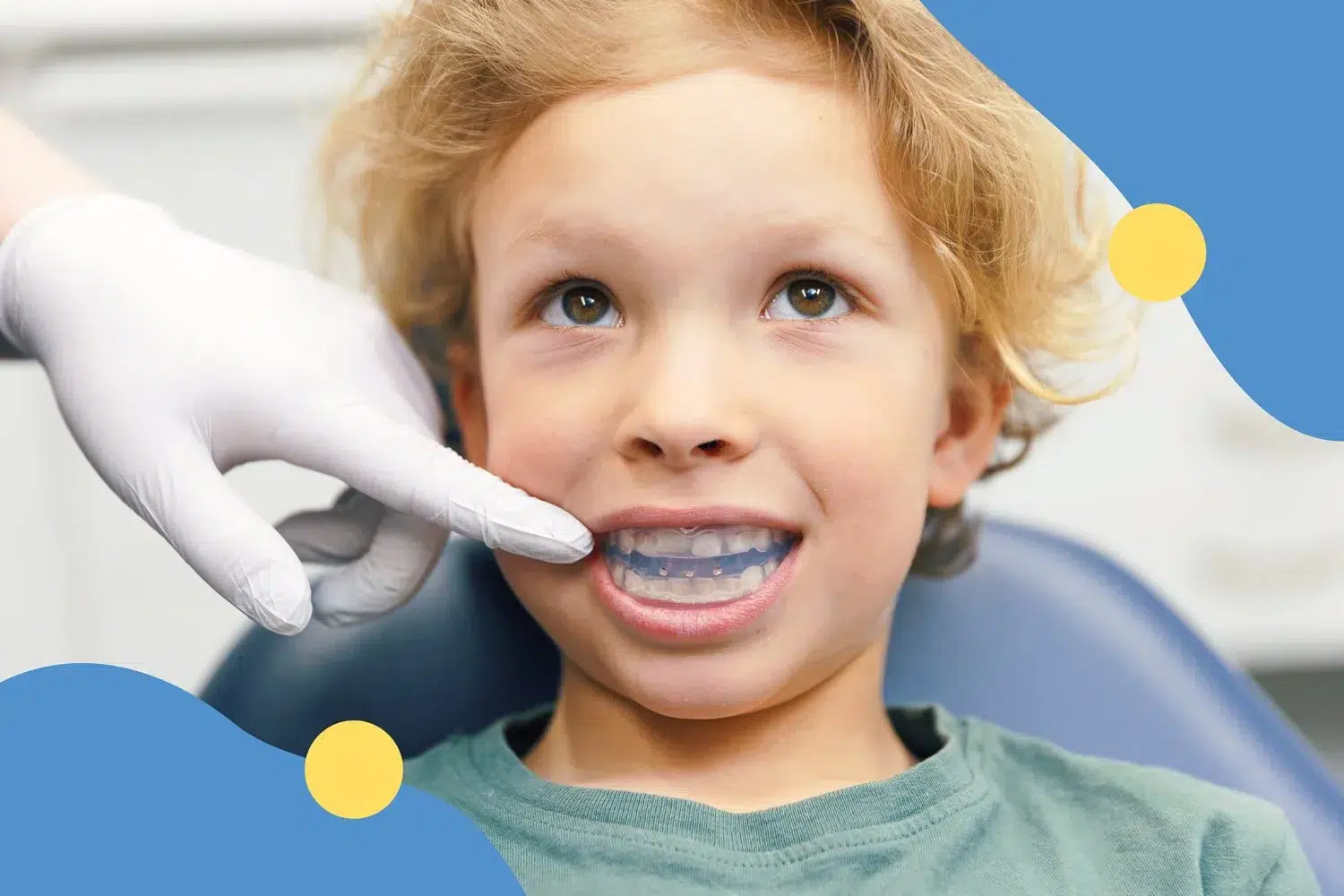
In particular, during the first phase of orthodontic treatment for children, occlusion guides (such as LM activators) may be used, typically at night.
In addition to promoting proper tooth development, these appliances can also gently guide jaw growth, preventing crowding and bite problems caused by jaw size or position.
In some cases, additional force is needed to move the teeth. In such cases, a headgear (i.e., extraoral traction) can be used, which is a device worn outside the mouth. It is used especially when moving the upper teeth backward, for example, when the upper jaw or upper front teeth are prominent. The headgear is usually worn in the evenings and at night.
Hybrid appliances – combine the benefits of different orthodontic methods

Since both membranes and fixed appliances have their own advantages, it sometimes makes sense to combine them. In hybrid orthodontic treatment, for example, it is possible to:
- ...start with fixed appliances, which can be used to correct more difficult malocclusions, and then move on to aligners in the final stage to refine the bite and aesthetics.
- …install braces on the lower arch, for example, and straighten the upper arch teeth with aligners
- ...use braces to straighten the teeth that are most crooked ("partially fixed") and use aligners on top of them.
This allows us to utilize the best aspects of each orthodontic method and tailor treatment to be as effective as possible.
Which orthodontic treatment method is right for you?
Each orthodontic treatment is planned individually, and the most suitable method depends on the initial condition of the teeth, the treatment goals, and the customer's aesthetic preferences.
If you're considering orthodontic treatment, book a consultation—let's work together to find the solution that's best for you! We look forward to seeing you at our office.
