
Phase 1 orthodontic treatment
The Right Care for Your Child's Teeth
Orthodontic treatment for children is divided into two phases:
- The first stage is carried out when the child is around 6–10 years old, while they still have their baby teeth or their first permanent teeth have come in.
- The second phase is typically carried out between the ages of 11 and 14, once all the permanent teeth have come in. This is more similar to orthodontic treatment for adults.
In this article, we focus on Phase I orthodontic treatment: when it is necessary, what benefits it offers, and what methods are used.


Why is orthodontic treatment necessary even for young children?
Although baby teeth are temporary, their alignment and bite play a significant role in a child’s oral development. Early orthodontic treatment can:
- Makes second-stage treatment easier or even unnecessary – early treatment can prevent problems from worsening and shorten the duration of subsequent treatment.
- Correct habits that hinder growth, such as thumb-sucking or an incorrect tongue position.
- Treats severe malocclusions and crowded teeth, which can interfere with normal jaw development.
- Reduces the risk of dental injuries – for example, protruding front teeth may be prone to knocks.
- Support the child's self-esteem if their teeth are causing psychological or social distress.
When is Phase 1 orthodontic treatment necessary?
Every child’s bite develops differently, but certain situations require early orthodontic treatment:
- Crossbites (lateral or anterior)
- Severe deep bite (the upper teeth cover the lower teeth too much)
- Significant crowding of the teeth
- Teeth that have not erupted or delayed eruption
- Underbite (the lower teeth protrude in front of the upper teeth)
- Severe overbite (the upper teeth protrude significantly forward)
The first phase of treatment is always tailored to the individual, and it typically lasts 6–12 months. After treatment, a break is taken to allow the permanent teeth to erupt—and to assess whether a second phase of orthodontic treatment is needed.
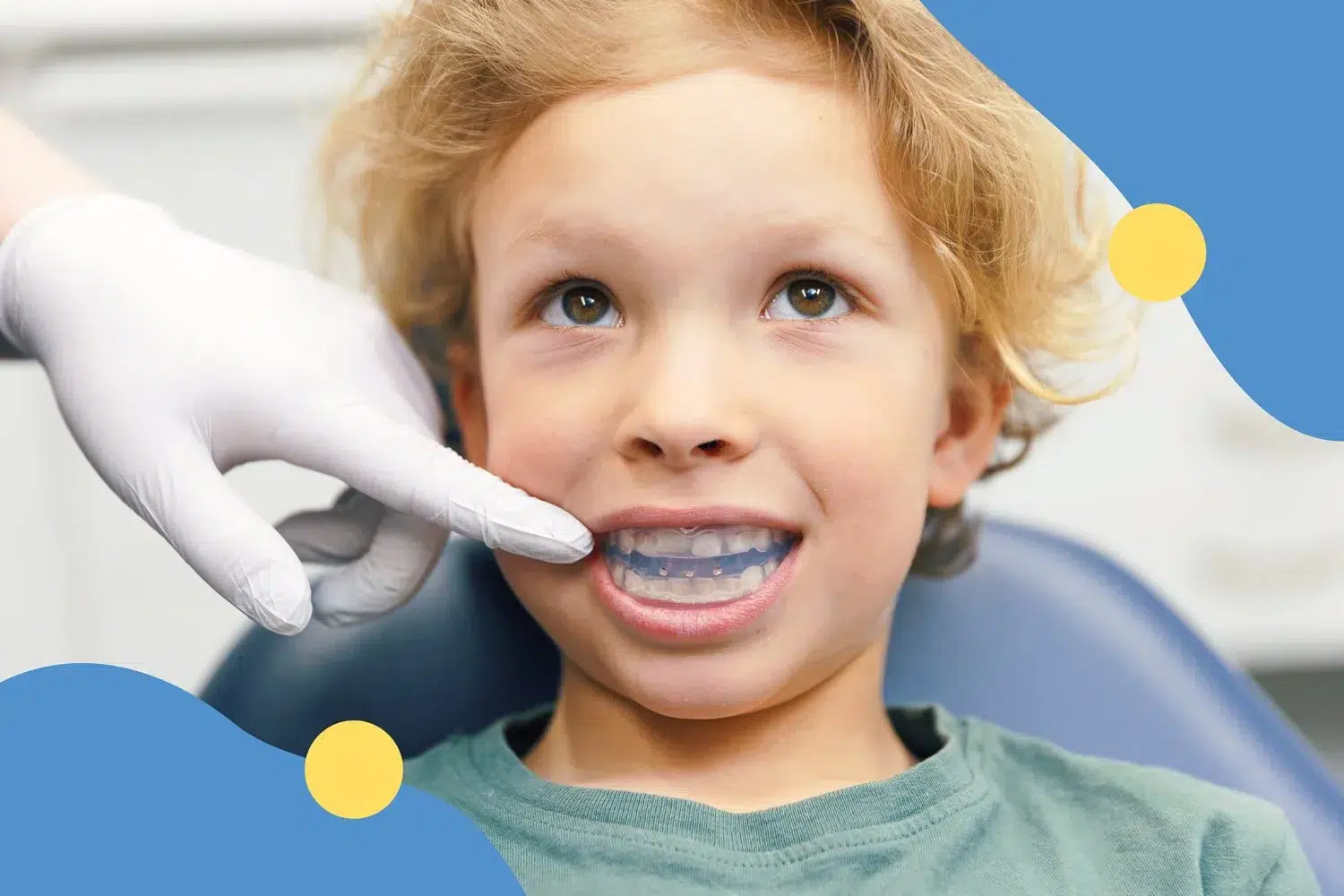
How is Phase 1 orthodontic treatment carried out?
The goal of treatment is to be as short and cost-effective as possible, while also being effective in terms of results. The following options may be used in Phase 1 orthodontic treatment:
- Extraction or filing of baby teeth if there isn't enough room in the mouth for the new teeth.
- Partial braces, i.e., braces for only certain teeth.
- Orthodontic appliances (LM activators) that guide jaw growth in mild cases.
- Nighttime stretches, such as neck stretches or facial mask stretches, which are used to treat certain jaw growth issues.
- The QuadHelix (QH) appliance, which expands the upper dental arch in cases of mild crowding.
- The Rapid Maxillary Expansion (RME) appliance, which widens the dental arch in cases of severe crossbite.
Book your consultation
Phone reservations: 010 323 3963 (during reception hours)

Does my child need Phase 1 orthodontic treatment?
Not all children need to undergo treatment in two phases—sometimes the second phase alone is sufficient after the permanent teeth have come in.
The most important thing is timely assessment.
An orthodontist can determine whether initial treatment is necessary or if it is possible to wait until the second phase.
The public healthcare system only provides orthodontic treatment for the most severe malocclusions, so many children are left out. If you are unsure about your child’s dental development, it is advisable to seek an evaluation early on. For orthodontic treatment during growth, it is best to consult an orthodontist directly, as taking into account the current and future growth of the jaws requires specialized expertise.
Don't wait—book a consultation so we can assess your child's situation and plan the best possible treatment. 😊